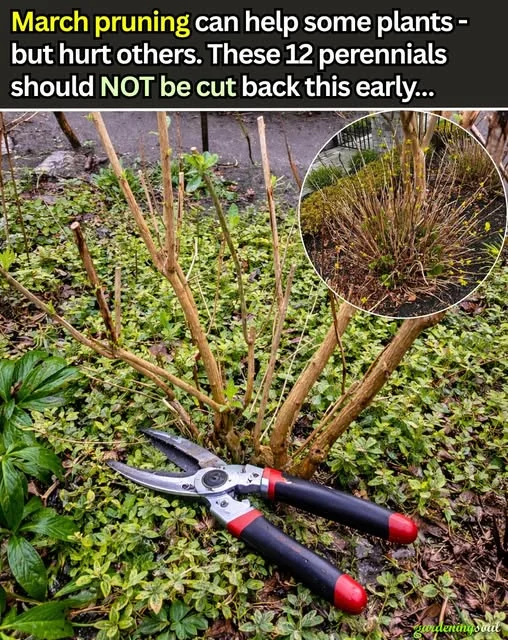
Cutting too early can result in fewer flowers, slower recovery, and reduced support for wildlife. If you see new growth emerging at the base or on stems, hold off on pruning.
Lavender – Old Wood Risk and Frost Sensitivity
Lavender’s lower structure eventually becomes woody, with new growth sprouting from certain green nodes. In cooler climates, it starts waking up internally around March, even if this isn’t visible yet. Cutting lavender too early risks damaging the old wood, affecting its ability to regenerate, and exposing inner stems to frost, potentially harming buds.
It’s best to prune lavender after new green shoots appear or post-flowering.
Bigleaf & Oakleaf Hydrangeas – Cutting Off the Flowers
Certain hydrangeas develop their flower buds during the previous summer. By March, these buds are ready for spring warmth. Cutting back too early removes future blooms, which confuses gardeners when leaves appear but flowers don’t. Only prune these hydrangeas post-flowering.
Coneflower – Stem Habitat and Crown Protection
Coneflowers have thick stems and seed heads that serve as winter habitats for bees and beneficial insects. Cutting before insects emerge destroys this shelter. The dried top also protects the crown from temperature fluctuations. Waiting a bit protects both plant and pollinators.
Black-Eyed Susan – Self-Seeding and Root Energy Timing
Black-eyed Susans naturally reseed if seed heads are left through winter. Early cutting removes viable seeds. The plant also retrieves stored energy from old stems in late winter, so early cutting interrupts this process. Wait until new basal leaves appear.
Continue on the next page