Instructions
Step 1. In a bowl, combine the buttermilk, salt, black pepper, garlic powder, and paprika.
Step 2. Add the chicken tenders to the mixture and marinate for at least 30 minutes in the refrigerator.
Step 3. In one shallow bowl, place the flour. In a second bowl, beat the eggs. In a third bowl, add the breadcrumbs.
Step 4. Remove the chicken from the marinade. Dredge each piece in flour, dip into the eggs, and coat thoroughly with breadcrumbs.
Step 5. Heat vegetable oil in a deep skillet or fryer to 350°F (175°C).
Step 6. Fry the chicken tenders in batches for 4–6 minutes per side, or until golden brown and the internal temperature reaches 165°F (74°C).
Step 7. Transfer the cooked chicken to a paper towel-lined plate.
Step 8. Soak the potato fries in cold water for 20 minutes, then drain and pat completely dry.
Step 9. Fry the potatoes in batches at 350°F (175°C) for 5–7 minutes until golden and crispy.
Step 10. Remove the fries from the oil and season immediately with salt and paprika.
Step 11. In a large bowl, combine the green cabbage, red cabbage, and shredded carrots.
Step 12. In a separate bowl, whisk together the mayonnaise, apple cider vinegar, lemon juice, sugar, salt, and black pepper.
Step 13. Pour the dressing over the vegetables and toss until evenly coated.
Step 14. Chill the coleslaw for 15 minutes before serving for the best flavor.
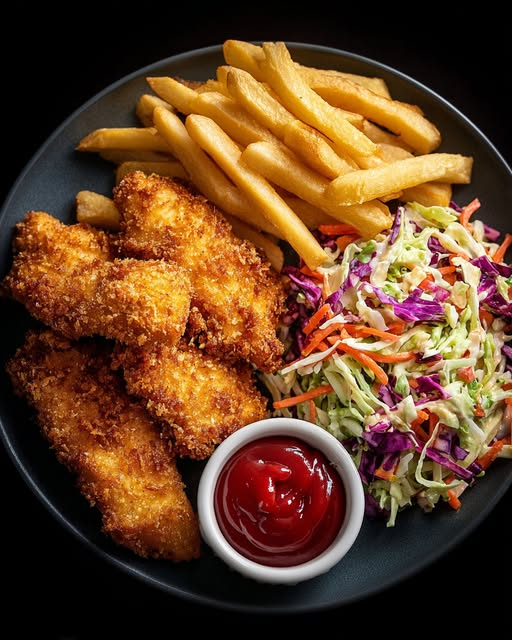
Step 15. Serve the crispy chicken tenders with French fries, coleslaw, and ketchup on the side.
Storage and Reheating Tips
Store leftover chicken tenders, fries, and coleslaw separately in airtight containers in the refrigerator for up to 3 days.
The coleslaw is best enjoyed within 2 days for maximum freshness and crunch.
Reheat the chicken tenders in an oven or air fryer at 375°F (190°C) for 5–8 minutes until crispy and heated through.
Reheat the fries in an oven or air fryer at 400°F (200°C) for 4–6 minutes to restore crispness.
Avoid microwaving the chicken and fries, as they may become soft.
Do not freeze the coleslaw, as the vegetables will lose their texture after thawing.
Continue on the next page