Instructions
Step 1: Preheat the oven to 425°F (220°C).
Step 2: Pat the chicken drumsticks dry with paper towels and place them in a large bowl.
Step 3: Combine olive oil, garlic powder, onion powder, rosemary, thyme, paprika, salt, black pepper, and lemon juice in a small bowl.
Step 4: Pour the seasoning mixture over the chicken and toss until evenly coated.
Step 5: Arrange the drumsticks on a parchment-lined baking sheet.
Step 6: In a separate bowl, toss the potato wedges with olive oil, rosemary, garlic powder, salt, and black pepper.
Step 7: Spread the potatoes around the chicken in a single layer.
Step 8: Roast for 40–45 minutes, turning the potatoes halfway through cooking, until the chicken reaches an internal temperature of 165°F (74°C) and the potatoes are golden brown.
Step 9: While the chicken and potatoes roast, place the baby carrots in a saucepan with enough water to cover them.
Step 10: Bring to a boil and cook for 8–10 minutes until tender.
Step 11: Drain the carrots and toss with butter, parsley, salt, and black pepper.
Step 12: Cook the peas according to package directions or simmer them in a small saucepan for 3–4 minutes.
Step 13: Drain the peas and stir in the butter, salt, and black pepper.
Step 14: Remove the chicken and potatoes from the oven and allow the chicken to rest for 5 minutes.
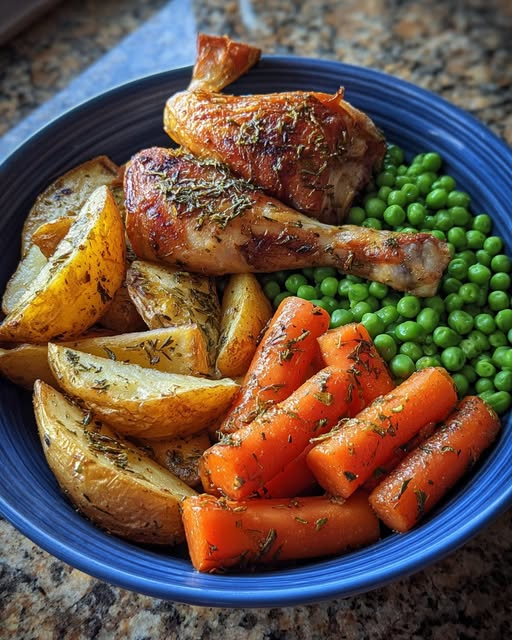
Step 15: Arrange the roasted chicken drumsticks, potato wedges, carrots, and peas on serving plates.
Step 16: Garnish with a sprinkle of dried herbs and serve warm.
Storage and Reheating Tips
Store leftover chicken, potatoes, carrots, and peas in separate airtight containers in the refrigerator for up to 4 days.
Reheat the chicken and potatoes in a 375°F (190°C) oven for 10–15 minutes or until heated through.
Carrots and peas can be reheated in the microwave or on the stovetop with a small amount of butter.
For meal prep, portion the chicken and vegetables into individual containers for quick lunches or dinners.
The chicken and potatoes can be frozen for up to 3 months. Thaw overnight in the refrigerator before reheating.
Continue on the next page