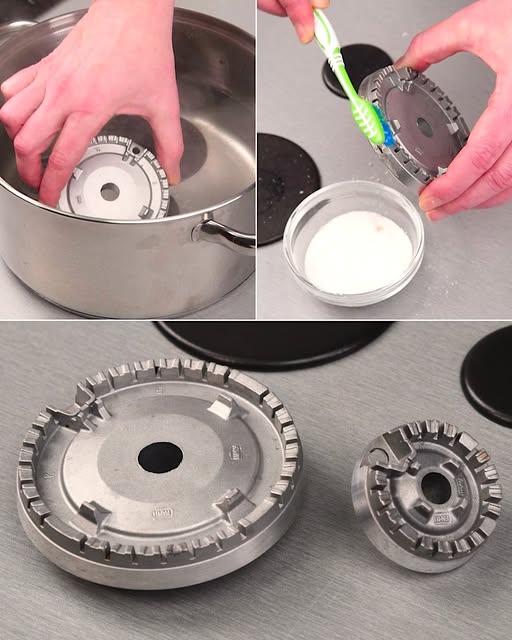
Every day, you prepare delicious meals. But have you ever really looked at what’s hiding under your pans? A thin layer of grease and charred crumbs, sometimes invisible to the naked eye, can accumulate on your stovetop. What if it’s not just a matter of cleanliness, but also of home safety? Here’s why you should pay special attention…
Why is it crucial to clean your gas stove burners regularly?
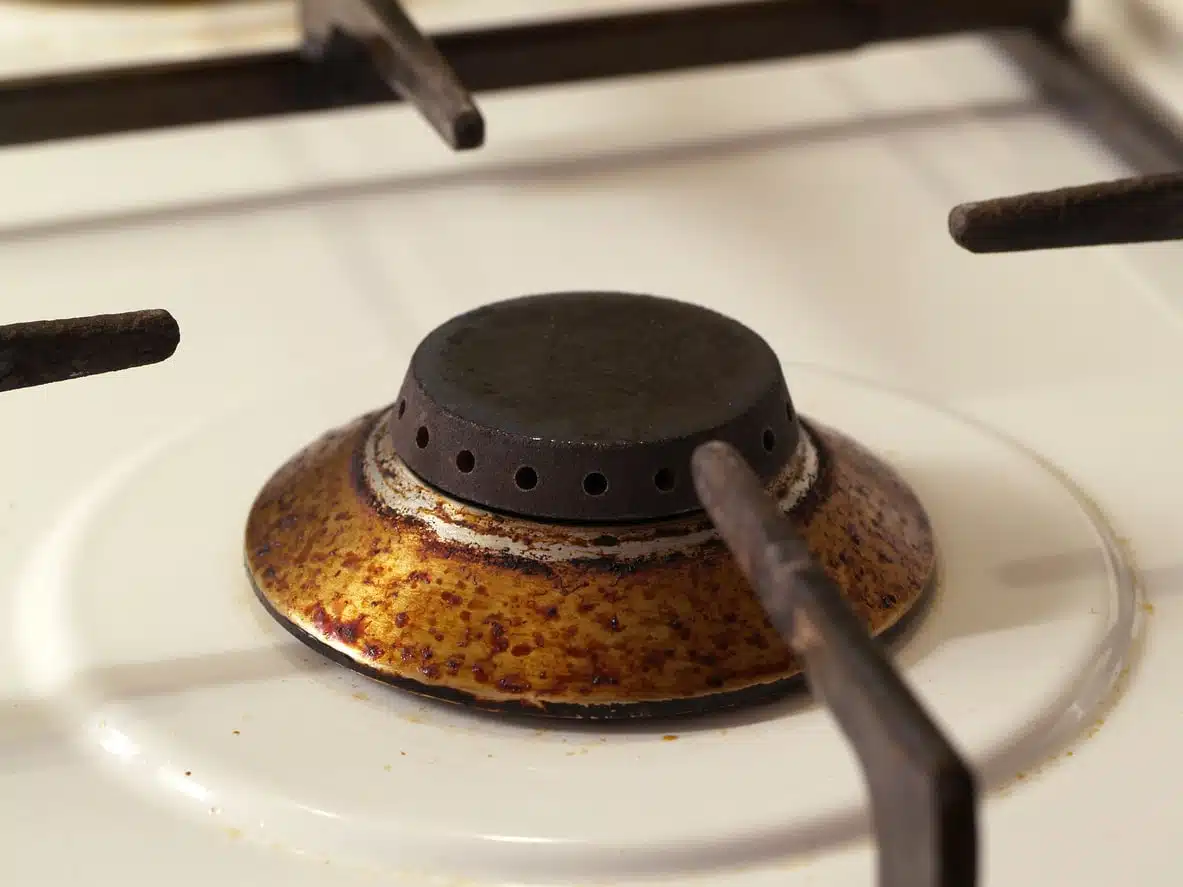
A dirty burner isn’t just an unpleasant detail. It can compromise the quality of cooking: uneven flames, a drop in temperature, or even a complete shutdown. Imagine a clogged faucet: the water no longer flows properly. The same goes for gas. The result: your food cooks poorly… or too slowly.
And that’s not all. A buildup of burnt-on grease can cause lingering odors and even pose a real danger. Yes, even a small amount of grease can ignite. Like a frying pan left on the stove , a poorly cleaned burner becomes a potential fire source.
Mistakes to absolutely avoid
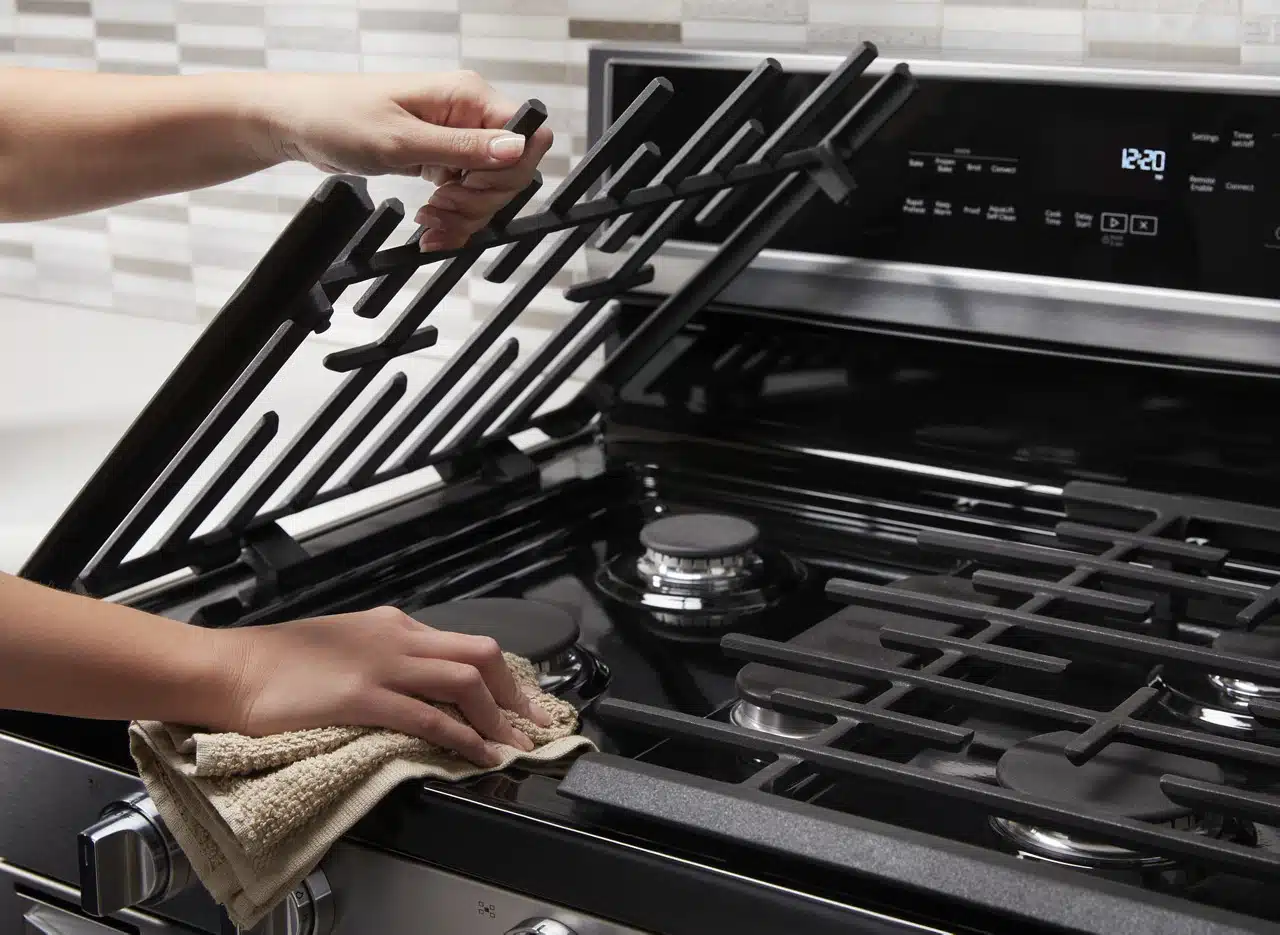
We often think we’re doing the right thing… and yet. Here are some classic mistakes to avoid:
- Use regular household vinegar : too mild. Instead, use 8° white vinegar , which is much more effective at dissolving grease.
- Use a toothpick to dislodge the residue: be careful, it can break and block the gas lines. A simple piece of stiff cardboard or a small plastic pick works much better.
- Forgetting to dry the parts : Residual moisture promotes rust. A soft, dry cloth is essential.
Continue on the next page