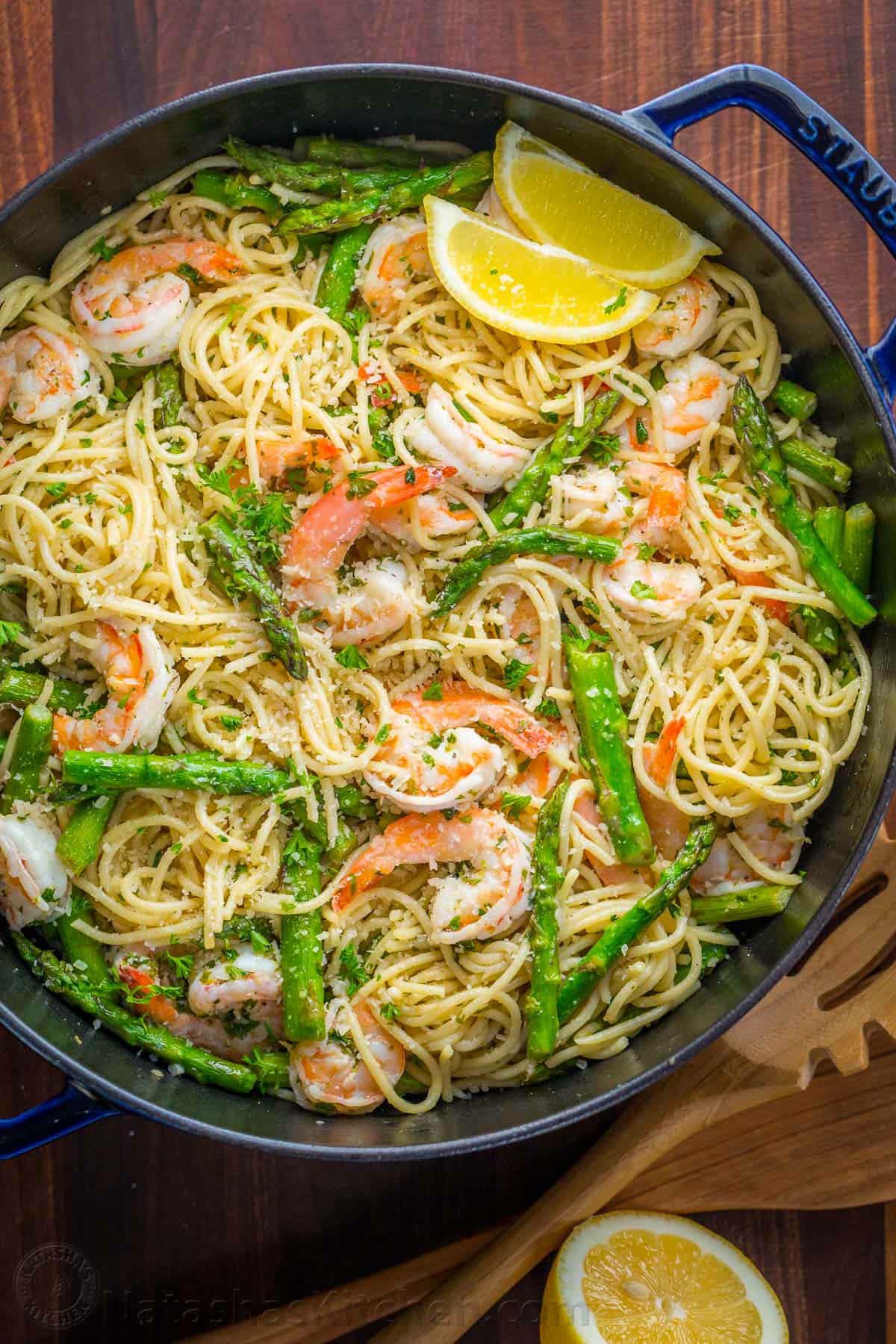
Instructions
Step 1: Bring a large pot of generously salted water to a boil. Cook the pasta according to the package directions until al dente. Reserve about 1/2 cup of the pasta water before draining.
Step 2: While the pasta cooks, pat the shrimp dry with paper towels and season them with salt and black pepper.
Step 3: Heat the olive oil and 1 tablespoon of butter in a large skillet over medium-high heat. Add the asparagus and sauté for 3 to 4 minutes, until bright green and crisp-tender.
Step 4: Add the shrimp to the skillet and cook for about 1 to 2 minutes per side, or until pink and just cooked through. Transfer the shrimp and asparagus to a plate so they do not overcook.
Step 5: Reduce the heat to medium. Add the remaining 3 tablespoons of butter, minced garlic, and red pepper flakes to the skillet. Cook for about 30 to 60 seconds, stirring frequently, until the garlic is fragrant.
Step 6: Pour in the white wine or chicken broth and simmer for 2 to 3 minutes, scraping up any flavorful browned bits from the bottom of the skillet.
Step 7: Stir in the lemon juice and lemon zest. Add the drained pasta and toss until evenly coated in the garlic butter sauce. Add a splash of reserved pasta water if needed to loosen the sauce.
Step 8: Return the shrimp and asparagus to the skillet. Add the Parmesan and chopped parsley, then gently toss everything together until warmed through and well combined.
Step 9: Taste and adjust the salt, pepper, lemon juice, or red pepper flakes as desired. Serve immediately with additional Parmesan, parsley, and fresh lemon wedges.
Storage and Reheating Tips
Store leftovers in an airtight container in the refrigerator for up to 3 days. Because shrimp can become rubbery when overheated, reheat the pasta gently in a skillet over medium-low heat with a small splash of water or chicken broth. Stir occasionally just until warmed through. Individual portions can also be microwaved in short intervals at reduced power. Freezing is not recommended because the shrimp and asparagus can lose their best texture after thawing.
Continue on the next page