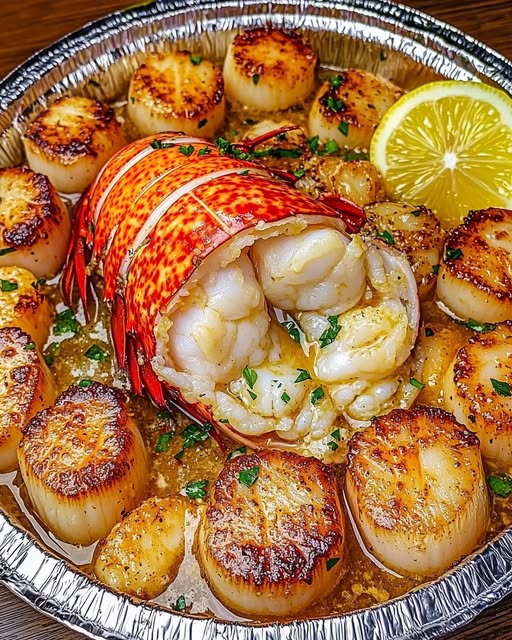
Instructions
Step 1: Pat the scallops completely dry with paper towels and remove the small side muscle if attached.
Step 2: Using kitchen shears, carefully cut down the center of each lobster shell. Gently loosen the meat and place it on top of the shell.
Step 3: Season the lobster tails and scallops with paprika, garlic powder, salt, and black pepper.
Step 4: Melt the butter in a small saucepan over low heat. Stir in the minced garlic, lemon juice, and lemon zest. Cook for 1 minute and remove from heat.
Step 5: Heat 1 tablespoon of olive oil in a large skillet over medium-high heat.
Step 6: Place the lobster tails shell-side down in the skillet and cook for 4–5 minutes. Spoon some garlic butter over the meat as it cooks.
Step 7: Cover the skillet and continue cooking for 3–4 minutes, or until the lobster meat is opaque and reaches an internal temperature of 140–145°F (60–63°C). Remove and keep warm.
Step 8: Add the remaining olive oil to the skillet and heat until very hot.
Step 9: Place the scallops in a single layer, leaving space between each one. Sear for 2–3 minutes without moving them.
Step 10: Flip the scallops and cook for another 1–2 minutes until golden brown and just opaque in the center.
Step 11: Return the lobster tails to the skillet and drizzle the remaining garlic butter over both the lobster and scallops.
Step 12: Sprinkle with fresh parsley and chives.
Step 13: Serve immediately with lemon wedges and extra garlic butter sauce from the pan.
Storage and Reheating Tips
Store leftover lobster and scallops in an airtight container in the refrigerator for up to 2 days.
Reheat gently in a covered skillet over low heat with a small amount of butter to prevent the seafood from drying out.
Avoid microwaving whenever possible, as it can make both lobster and scallops tough and rubbery.
Seafood is best enjoyed fresh, but leftovers can be added to pasta, salads, or seafood chowders.
Do not freeze cooked scallops and lobster together, as their texture may deteriorate significantly after thawing.
Continue on the next page